English version is here / 日本語版はこちら
In the world of Junior Tennis, heavy topspin is the current trend. While it is relatively easy to return balls with similar rotations, errors spike when attempting a Conversion of Action, such as switching from topspin to slice or vice versa. Is this simply a result of poor footwork or flawed form?
Conversion of Action
Changing ball types is a physical conversion of action. The most critical factor is absorbing the full power of the incoming ball. If the Catch is weak, the ball leaves the strings before power is fully transmitted, leading to a loss of control. By consciously increasing the ratio of catching with the Felt, you reset the opponent’s rotation and momentum to convert it into your own shot type.
Ball Type Change
At impact, the ball deforms according to the vector applied by the opponent and remains on the racket face for a micro-time axis. How you apply pressure to the felt and the core within this split second determines the success or failure of the shot.
The Felt and the Core: A Tri-Layer Analysis
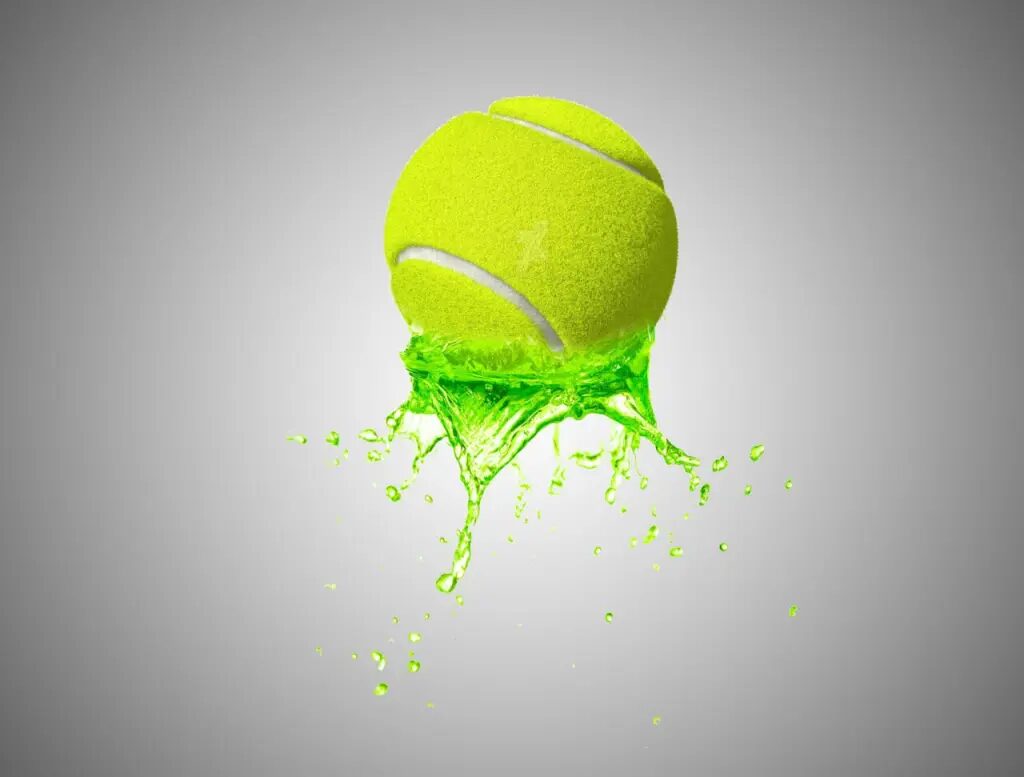
To master shot conversion, you must focus on the outer felt and the inner core. Understanding this dual structure allows you to visualize and control how power is pressed into the ball.
- Outer Layer: Felt Covering
- Composition: Made of approximately 50% wool and 50% nylon. Wool improves the feel of the hit while nylon provides durability
- Role: Generates spin by gripping the strings and controls speed through air resistance
- Fact: The Optic Yellow color is used because it is the most recognizable to the human eye
- Middle Layer: Vulcanized Adhesive and Rubber Core
- Adhesive: The vulcanization process creates a bond strong enough to withstand high-impact hits
- Core: This 5mm thick rubber acts as the skeleton that supports the felt and absorbs rebound force
- Inner Layer: Hollow Core (Compressed Air)
- Pressure: Air is sealed at 12–14 PSI, which is higher than atmospheric pressure
- Role: Creates the intense rebound force as the ball returns to its original shape
- Note: Pressure balls eventually lose air through the rubber, leading to dead balls that do not bounce properly
When maintaining the same rotation, imagine penetrating through the felt, rubber, and hollow core in that order. For shot conversion, prioritize the ratio of engagement with the felt over the penetration vector. Extending the contact time with the racket allows your intent to rewrite the ball’s physics.
Practical Advice: Developing the Sensation of Conversion
This practice refines the feeling of catching the ball with the felt while strengthening your core.
- Slice to Spin Conversion
- When returning a slice (backspin) with spin (topspin), focus on increasing swing speed while decreasing ball speed
- Tip: Visualize an inverse relationship between swing speed and ball speed. Accelerate the motion after impact to ensure the felt bites the strings
- Spin to Slice Conversion
- When returning spin (topspin) with a slice (backspin), focus on a vertical rotation feeling while eliminating side spin
- Tip: Unintentional side spin makes the conversion unstable. Keep the axis of rotation as simple as possible and push the ball through the target line
Dominating Physical Phenomena
Mastering the Conversion of Action dramatically raises your shot average. It provides intentional variations for defensive play and overcomes weaknesses related to different surfaces. Instead of merely hitting the ball, manipulate the physical phenomenon through your approach to the Felt and Core. Use this sensation to seize total dominance on the court.








コメント